Tag: Lynx

Favorite Photos: September 2025

  1. Favorite Photos: January 2023
  2. Favorite Photos: February 2023
  3. Favorite Photos: March 2023
  4. Favorite Photos: April 2023
  5. Favorite Photos: May 2023
  6. Favorite Photos: June 2023
  7. Favorite Photos: July 2023
  8. Favorite Photos: August 2023
  9. Paris Is Always A Good Idea
  10. Favorite Photos: October 2023
  11. Favorite Photos: November 2023
  12. Favorite Photos: December 2023
  13. Favorite Photos: January 2024
  14. Favorite Photos: February 2024
  15. Favorite Photos: March 2024
  16. Favorite Photos: April 2024
  17. Favorite Photos: May 2024
  18. Favorite Photos: June 2024
  19. Favorite Photos: July 2024
  20. Favorite Photos: August 2024
  21. Favorite Photos: September 2024
  22. Favorite Photos: October 2024
  23. Favorite Photos: November 2024
  24. Favorite Photos: December 2024
  25. Favorite Photos: January 2025
  26. Favorite Photos: February 2025
  27. Favorite Photos: March 2025
  28. Favorite Photos: April 2025
  29. Favorite Photos: May 2025
  30. Favorite Photos: June 2025
  31. Favorite Photos: July 2025
  32. Favorite Photos: August 2025
  33. Favorite Photos: September 2025
  34. Favorite Photos: October 2025
  35. Favorite Photos: November 2025 Scheduled for 2nd December 2025
  36. Favorite Photos: December 2025 Scheduled for 7th January 2026
The photo features a mating pair of Ruddy darters (Sympetrum sanguineum) in a serene, symmetrical composition above calm water. The male, with its vibrant red abdomen and translucent wings, clasps the female in the characteristic "wheel" position, their bodies aligned vertically against a soft blue sky. The reflection below mirrors them perfectly, creating an illusion of infinite extension and adding a poetic balance to the scene. Tiny dew-like sparkles glisten on their wings, caught by the gentle morning light, while the minimalistic background emphasizes their delicate forms and the intimate beauty of this natural moment.

A pair of mating ruddy darters (Sympetrum sanguineum) that I photographed at the small lake near our house, the same spot where I had photographed the four-spotted chaser last month.

These darters are small dragonflies native to Europe and parts of Asia, renowned for the males’ striking red abdomen that intensifies with age, making them a vivid sight in late summer. This dragonfly is a common species in Sweden, especially in the southern part of the country.

Trying to photograph dragonflies in flight for the first time was challenging but rewarding. The thrill came from capturing those few “perfect” moments, making the effort worthwhile. 

Dragonflies in flight are difficult to capture due to their speed and unpredictable movement. I discovered that holding down the shutter once in focus increases your chances of sharp, well-composed shots, even if it means taking hundreds of photos to get a few great ones.

Use the same settings as for small birds: animal tracking with a high shutter speed (at least 1/2.500 or 1/4.000 in good light). Animal tracking works incredibly well, especially on a clean background such as the sky or the water.

My gear and settings for this photo:

  • Canon R5 Mark II & Canon RF100-500mm F4.5-7.1 L IS USM @500mm
  • Aperture = f8 Shutter Speed = 1/4.000 ISO = Auto ISO (3.200 for this photo)
  • Drive = High Speed Continous

Steward Wood has a very good video about photographing flying dragonflies, I watched it just before I went out to the lake and it was very helpful, I recommend it if you want to try your hand at flying bugs.


This photo shows a common blue butterfly male (Polyommatus icarus) perched delicately on an Echinacea purpurea var. Magnus flower in a garden. The butterfly, with its vibrant orange and black wings spread slightly, contrasts beautifully against the flower’s large, daisy-like pink-purple petals and prominent coppery-orange center. The morning light filters through the mist, casting a soft glow on the butterfly’s intricate wing patterns and the flower’s velvety texture. The background is a gentle blur of green foliage and other blooms, enhancing the serene and delicate beauty of this early autumn garden moment.

A male common blue butterfly (Polyommatus icarus) perched on an Echinacea purpurea ‘Magnus’ flower in our garden. This is what I love about our house: a wildlife garden filled with insects, butterflies, small and not-so-small animals (deer love my flowers, too!), and numerous birds! I need only to step out to find something to photograph!

Common blue males typically have wings that are blue above, with a black-brown border and a white fringe, similar to the one in my photo. The females are usually brown above with a blue dusting and orange spots.

These butterflies drink nectar from plants like clovers and bird’s-foot trefoil. Their caterpillars eat leguminous plants and even team up with ants for protection. The adults only live about three weeks, and the males often chase each other around to defend their territory.

This photo features a ladybug perched delicately on an Echinacea purpurea var. Magnus flower. The ladybug’s vibrant red wings, dotted with black spots, stand out against the flower’s large, pink-purple petals and coppery-orange center, which are kissed by the afternoon light filtering through a gentle mist. The insect’s tiny legs grip the velvety petal, and its glossy shell reflects the soft glow, adding a touch of brilliance. The background is a soft blur of green foliage and other blooms, enhancing the serene and detailed beauty of this charming garden scene.

A ladybug perched delicately on an Echinacea purpurea var. Magnus flower – another photo from my garden.

Am I done with the safari photos? Not at all! But there’s too much of a good thing, you know. I needed a break from the hundreds of safari photos, to be honest. And the garden is so beautiful, I was aching to be out and look for butterflies, bumblebees, and ladybugs!

The photo features a lynx standing alert in a misty forest clearing. The lynx’s thick, tawny fur, speckled with dark spots, glows softly under the overcast morning light, its tufted ears perked. Its piercing amber eyes gaze intently ahead, framed by a subtle facial ruff, while its powerful legs are poised on the damp mossy ground. The background is a gentle blur of pine trees and green foliage, the mist lending an ethereal quality that enhances the wild, majestic presence of this elusive feline in its natural habitat.
A close-up photo of a lynx standing alert in a misty forest clearing. The lynx’s thick, tawny fur, speckled with dark spots, glows softly under the overcast morning light, its tufted ears perked. Its piercing amber eyes gaze intently ahead, framed by a subtle facial ruff.

A young European Lynx (Lynx lynx) male from our recent trip to Northern Sweden. I just finished culling those photos, so I haven’t processed many of them yet. However, I started working on this handsome fellow right away. I loved those eyes gazing right at you and wanted to begin working on the photo immediately.

Can you believe I shot this at ISO 10,000? It was late afternoon in the forest. The light was fading, and he was in the shade. The widest aperture on my Canon RF100-500mm lens is f/7.1, so to capture more light, I often have to use high ISOs. If the animal is not moving much, I’d lower the shutter speed a lot (think 1/100 or 1/200). However, this guy was moving too much, so my shutter speed was 1/640s. A noisy photo (grainy due to high ISO) is always preferable to a blurry one.

He stood like this for only a few seconds while I took my safety shots, then vanished before I could lower the shutter speed much more. In these cases, exposing to the right (ETTR) is key. ETTR refers to intentionally making an image brighter by adjusting exposure so that the histogram leans more toward the right side (the highlights), which helps retain more image data. Noise, or visual grain from high ISO, tends to be more visible in the darker areas of a photo, and it’s much easier to remove grain from a bright image than a dark one.

I used Lightroom Classic to reduce the noise in the image, and I think it looks pretty good. For the worst cases of noise, I usually use Topaz.

This photo features a cheetah (Acinonyx jubatus) poised gracefully on a sunlit savanna. The cheetah’s sleek, tawny coat, adorned with its signature black tear marks and spots, shimmers under the morning light, highlighting the powerful muscles beneath its lithe frame. Its amber eyes are focused intently ahead, ears perked. The background is a warm blur of acacia trees and distant plains.

A male cheetah (Acinonyx jubatus) patrolling its territory in the soft morning light, together with its two brothers (not in this photo). I was lucky enough to follow the three cheetah brothers on foot for over an hour in the Lapalala Wilderness Reserve. That was no mean feat as it did require some cardio; cheetahs move fast, even when “only” walking.

Cheetah males form coalitions (usually of 2-3 littermate brothers) to establish and defend small territories (15-50 square miles/39-130 km²) within prey-rich areas. Living in coalitions rather than solitude enhances survival and mating success. In contrast, females range over much larger, nomadic territories, spanning up to 300 square miles (800 km²). Patrols by males involve daily circuits (6-11 km at 2.5-3.8 km/h) to monitor territory for intruders, prey, and potential mates.

During patrols, males mark boundaries at least once per hour using urine sprays, defecation, or cheek/chin rubbing, which conveys chemical signals about their identity and status; they revisit these sites frequently to reinforce claims. Vocalizations, such as high-pitched chirps, purrs, or growls, along with visual displays, help communicate and deter rivals. However, conflicts can escalate into fights over access to females or resources, sometimes resulting in injury or death. Coalitions rarely venture far from their core area except briefly to seek estrus females, prioritizing defense over expansion.

Young males leave their mother at 15-24 months and spend years as ‘floaters’ (roaming vast areas up to 1,600 km²) before gaining a territory, often as adults. This queuing strategy, combined with eventual coalition patrols, improves their chances against established groups. Patrols secure breeding rights and facilitate cooperative hunting, highlighting the cheetah’s distinctive, coalition-based social structure amid their decreasing wild population (~7,100).


📸 All photos were taken with Canon R5 Mark II & Canon RF100-500mm F4.5-7.1 L IS USM.


Related Posts


Love my work? Support my journey by buying me a coffee or sharing it on your preferred social network. And don’t forget to swing by my online shop to check out my latest prints and gifts. Thank you 🙏 !

Follow me on Instagram | Facebook | Threads | LinkedIn | Tumblr | X | Buy Me A Coffee 


Favorite Photos: February 2025

  1. Favorite Photos: January 2023
  2. Favorite Photos: February 2023
  3. Favorite Photos: March 2023
  4. Favorite Photos: April 2023
  5. Favorite Photos: May 2023
  6. Favorite Photos: June 2023
  7. Favorite Photos: July 2023
  8. Favorite Photos: August 2023
  9. Paris Is Always A Good Idea
  10. Favorite Photos: October 2023
  11. Favorite Photos: November 2023
  12. Favorite Photos: December 2023
  13. Favorite Photos: January 2024
  14. Favorite Photos: February 2024
  15. Favorite Photos: March 2024
  16. Favorite Photos: April 2024
  17. Favorite Photos: May 2024
  18. Favorite Photos: June 2024
  19. Favorite Photos: July 2024
  20. Favorite Photos: August 2024
  21. Favorite Photos: September 2024
  22. Favorite Photos: October 2024
  23. Favorite Photos: November 2024
  24. Favorite Photos: December 2024
  25. Favorite Photos: January 2025
  26. Favorite Photos: February 2025
  27. Favorite Photos: March 2025
  28. Favorite Photos: April 2025
  29. Favorite Photos: May 2025
  30. Favorite Photos: June 2025
  31. Favorite Photos: July 2025
  32. Favorite Photos: August 2025
  33. Favorite Photos: September 2025
  34. Favorite Photos: October 2025
  35. Favorite Photos: November 2025 Scheduled for 2nd December 2025
  36. Favorite Photos: December 2025 Scheduled for 7th January 2026
European Lynx (Lynx lynx)
European Lynx (Lynx lynx), Northern Sweden

February has been a tough month: dark and gloomy, with a few snowflakes here and there. We took a quick trip to Northern Sweden in search of some sun and snow, as well as some wildlife photography opportunities. 😁 I haven’t had a chance to process many images from that trip yet; I just finished culling them, but I couldn’t wait to share these two photos of a beautiful female lynx. Isn’t she stunning? I’m looking forward to sharing more photos from the trip soon!

Red Squirrel (Sciurus vulgaris)
Red Squirrel (Sciurus vulgaris), Lidingö, Sweden

Here are a couple of squirrel photos from two years ago. As I mentioned earlier, we haven’t seen much snow this year. I was hoping to capture some “squirrels in the snow” photos, but I haven’t had any luck so far. There’s still a chance for snow, of course, but I’m tired of winter now and honestly don’t want any more snow. I’m ready for spring! How is the season treating you?

Lion (Panthera leo), Lapalala Wilderness Reserve, South Africa

This is a new edit of a lion portrait I worked on a few months ago. While I was initially pleased with the first version, the idea of making a more dramatic edit kept coming to mind—I just couldn’t let it go! So, I decided to re-process the image, and I’m really happy with the final result.


Related Posts


Love my work? Support my journey by buying me a coffee or sharing it on your preferred social network. And don’t forget to swing by my online shop to check out my latest prints and gifts. Thank you 🙏 !

Follow me on Instagram | Facebook | Threads | LinkedIn | Tumblr | X | Buy Me A Coffee 


Favorite Photos: July 2023

  1. Favorite Photos: January 2023
  2. Favorite Photos: February 2023
  3. Favorite Photos: March 2023
  4. Favorite Photos: April 2023
  5. Favorite Photos: May 2023
  6. Favorite Photos: June 2023
  7. Favorite Photos: July 2023
  8. Favorite Photos: August 2023
  9. Paris Is Always A Good Idea
  10. Favorite Photos: October 2023
  11. Favorite Photos: November 2023
  12. Favorite Photos: December 2023
  13. Favorite Photos: January 2024
  14. Favorite Photos: February 2024
  15. Favorite Photos: March 2024
  16. Favorite Photos: April 2024
  17. Favorite Photos: May 2024
  18. Favorite Photos: June 2024
  19. Favorite Photos: July 2024
  20. Favorite Photos: August 2024
  21. Favorite Photos: September 2024
  22. Favorite Photos: October 2024
  23. Favorite Photos: November 2024
  24. Favorite Photos: December 2024
  25. Favorite Photos: January 2025
  26. Favorite Photos: February 2025
  27. Favorite Photos: March 2025
  28. Favorite Photos: April 2025
  29. Favorite Photos: May 2025
  30. Favorite Photos: June 2025
  31. Favorite Photos: July 2025
  32. Favorite Photos: August 2025
  33. Favorite Photos: September 2025
  34. Favorite Photos: October 2025
  35. Favorite Photos: November 2025 Scheduled for 2nd December 2025
  36. Favorite Photos: December 2025 Scheduled for 7th January 2026
Close-up of a pink dahlia

This is my favorite photo at the moment. I’ve finally bought a Lensbaby Velvet 85 lens, and I’m in love! This is the very first photo I’ve taken with it. It was meant as a test shot, and I didn’t have any expectations, Lensbabies using manual focus only thus a bit challenging, especially at large apertures – but look how gorgeous that Dahlia came out! Love, love, love it! I took a lot of photos yesterday but didn’t process them yet so, this one will have to do for now. Now I do have some expectations for the new photos, ha, ha!

Still life with a pink dahlia in a pink vase and two antique books

I’ve started experimenting with still-life photos and textures, which I quite like. I used my macro lens at f/2.8 for this photo and a couple of textures from 2 Lil’ Owls Studio. (Denise Love runs the studio, and her textures are gorgeous).

Close-up of a Dark Green Fritillary butterfly (Argynnis aglaja)

It’s butterfly and dragonfly season, and I’ve taken loads of photos. I didn’t have time to process any of them, save for this one, and that very quickly, mostly to test the new textures from 2 Lil’ Owls Studio. This is a dark green fritillary butterfly (Argynnis aglaja).
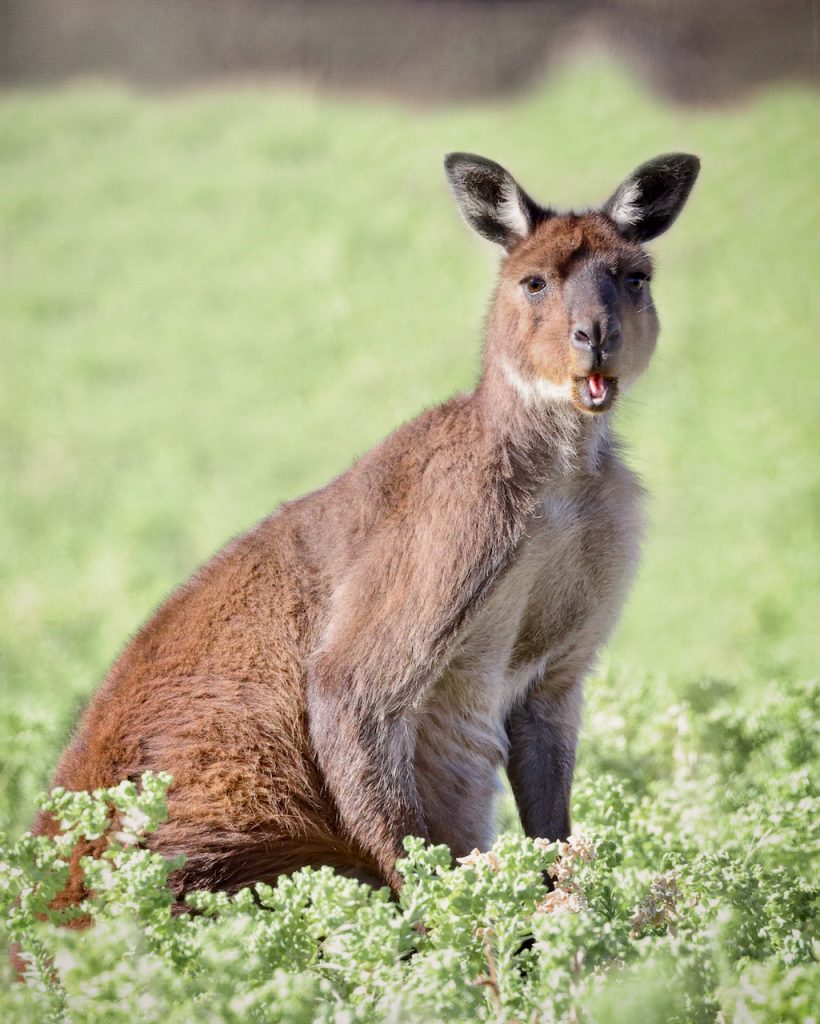
Portrait of a Kangaroo Island kangaroo (Macropus fuliginosus fuliginosus)  standing in a green field

Yep, I’m still processing Australia photos. I came home with 20 thousand photos. Even after brutal culling, I still have plenty of keepers to process. I found this funny Kangaroo Island kangaroo (Macropus fuliginosus fuliginosus) at Stokes Bay, Kangaroo Island (South Australia). I always dreamt of photographing one on the beach, but no luck. Yet.
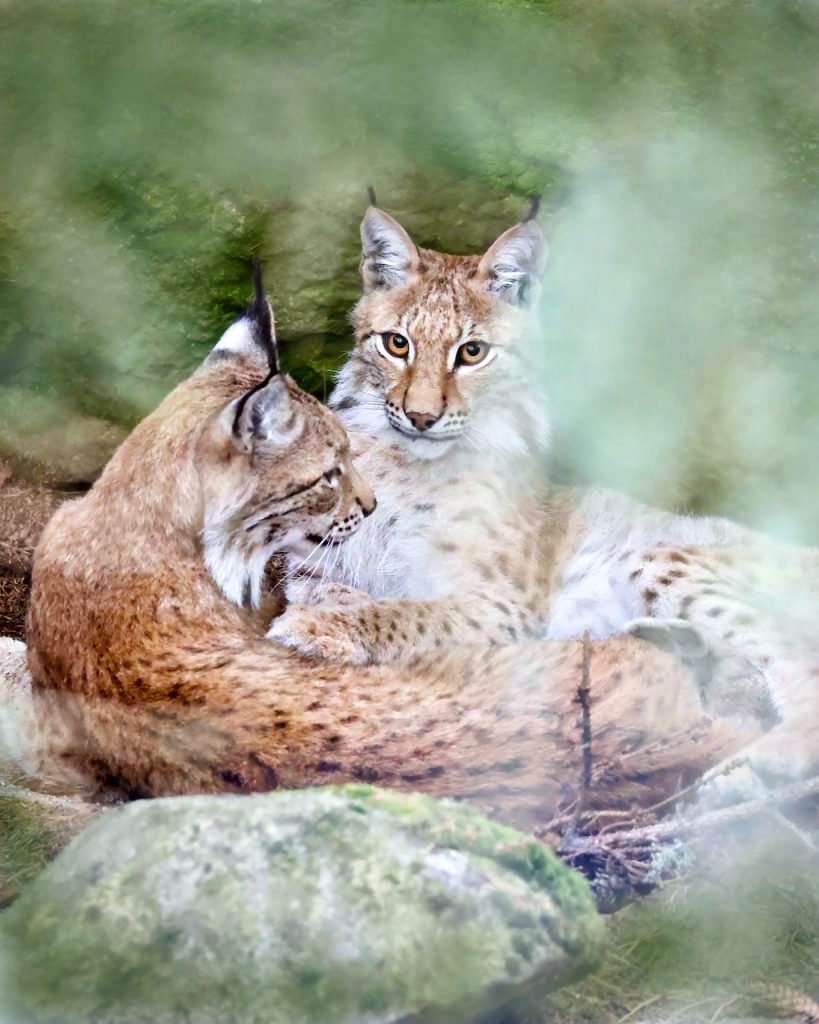
Two Eurasian lynxes (Lynx lynx) laying together

Northern lynxes (Lynx lynx lynx) rest after playing hard for half an hour or so. I photographed them and many other animals and birds at the Nordic Wilderness Center in Järvsö, some 300km north of Stockholm.

Did you know that these mini tigers can purr just like domestic cats? How cute?

Bonus: the stunning shades of blue and green of the sea on Kangaroo Island. The colors are so vibrant and captivating, it’s hard to believe they’re even real! These photos only start to capture the beauty and majesty of the ocean. I hope they can make you feel like you’re right there, soaking it all in.


I hope you enjoyed these photos, there are more to come next month.


Related Posts


If you liked this post, share it on your preferred social network or forward it to a friend.